AméricaEconomía features JFI’s basic income research in Brazil
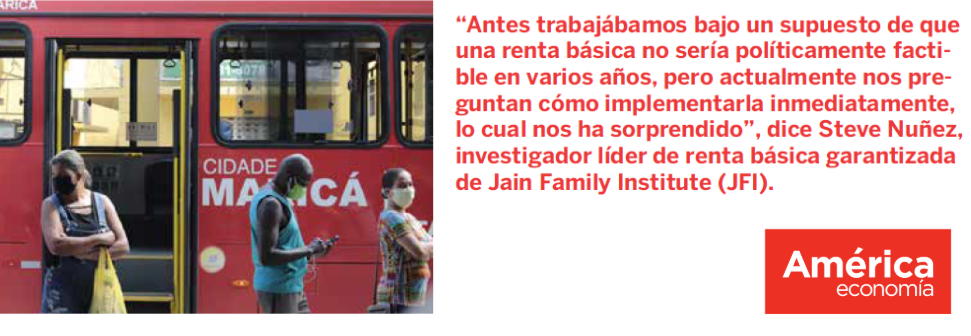
In a “UBI Special,” AméricaEconomía featured an in-depth article on the pandemic response of the city of Maricá, where JFI has been working with the local government on its city-wide basic income program, alongside researchers at Federal Fluminense University. Lead Researcher in Guaranteed Income, Stephen Nuñez, and Paul Katz, VP of Special Projects spoke about the impacts of having an existing infrastructure in place to distribute cash support in Maricá during the pandemic, and the idea of a “solidarity economy.”
When the city of Maricá was faced with the COVID-19 pandemic, they declared a state of emergency and immediately increased the amounts of the existing monthly basic income payments from 130 mumbucas (local currency) to 300 mumbucas (~$60 USD). While countries across the world implemented direct cash support during the pandemic, Maricá’s existing social program allowed for immediate help.
“We are very impressed by Maricá’s reaction, which I think is the fastest and most ambitious in the world. It’s clear that the city’s past decisions are paying off now,” Paul said of the program.
The pandemic has brought greater attention to the idea of basic income policy worldwide. “Before, we worked under the assumption that a basic income would not be politically feasible for several years, but currently they ask us how to implement it immediately, which surprised us,” Steve said.
Read the full article here, and read more about the Maricá basic income program here.
Thank you to Sol Park for the great interview and feature.
Related

HudsonUP Basic Income Pilot: Fifth and final report
"A mixed-methods evaluation (biannual surveys and interviews) shows that steady, unconditional cash reduces financial stress but cannot overcome systemic barriers...
New Research: The (In)accessibility of OBBB’s New Tax Cuts
Does the One Big Beautiful Bill benefit working families?

New Publication from the Compton Pledge: Insights for Tax Credit Policy Design
Lessons from an 800-family study in California.